


Overview
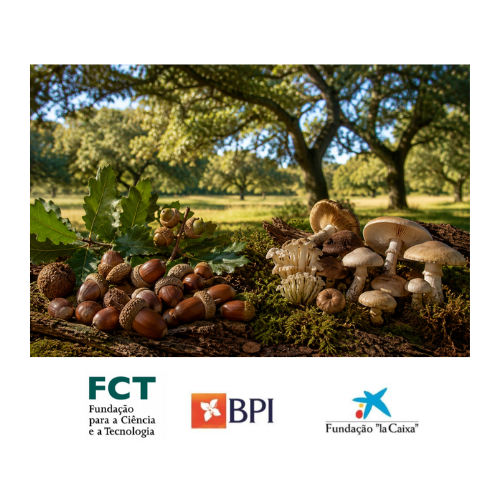
MycoAcorn - Mycelium and Acorn Bioprocesses for the Development of Innovative Functional Ingredients and Foods is a research, development and innovation project focused on valorising endogenous resources from inland Portugal.
The project combines holm oak acorns with mycelium obtained from wild mushrooms from the Montesinho Natural Park, using biotechnology and food science to develop ingredients with improved nutritional, functional and technological characteristics. Through controlled mycelium cultivation in bioreactors and acorn fermentation, MycoAcorn aims to transform underused biological resources into high-value ingredients and new functional foods, while promoting the circular bioeconomy, knowledge transfer and the competitiveness of the regional agri-food sector.
Context and Identified Problem
Trás-os-Montes has significant agroforestry resources and unique biodiversity but faces structural challenges associated with low population density, demographic ageing, limited industrial capacity and difficulties in creating highly qualified employment. Holm oak acorns and wild mushrooms are among the region’s resources with significant valorisation potential. Despite their territorial identity and nutritional properties, they remain poorly integrated into high-value food chains.
The use of acorns as a food ingredient is restricted by tannins, which cause astringency, other antinutritional factors and technological limitations. At the same time, the industrial use of wild mushrooms is affected by seasonality, variability and difficulties in obtaining consistent and reproducible ingredients. MycoAcorn aims to overcome these limitations through controlled biotechnological processes capable of producing standardised mycelial biomass and improving the nutritional and technofunctional characteristics of acorns.
Objectives
MycoAcorn’s main objective is to develop an integrated and circular biotechnological approach for transforming mycelium and acorns into innovative ingredients and functional foods. The project aims to:
- Select wild-mushroom mycelia with high food and functional potential;
- Develop and optimise submerged mycelium cultivation in bioreactors;
- Produce mycelial biomass rich in protein, fibre and β-glucans;
- Develop thermal and enzymatic pre-treatments for acorn fractionation;
- Obtain a sugar-rich aqueous acorn extract for use as a component of the mycelium culture medium;
- Use the remaining solid acorn fraction in solid-state fermentation;
- Reduce tannins and other antinutritional factors;
- Improve the ingredients’ nutritional profile, digestibility and technofunctional properties;
- Assess the safety, bioactivity and functional potential of the ingredients;
- Incorporate the ingredients into food prototypes;
- Evaluate the sensory, technological and microbiological quality of the products;
- Create a portfolio of ingredients and foods with potential for industrial transfer.
Technological Development and Innovation
MycoAcorn combines two complementary biotechnological processes: submerged mycelium cultivation in bioreactors and solid-state acorn fermentation. The first process will involve selecting mushroom strains from the Montesinho Natural Park and optimising their growth in bioreactors. Parameters such as culture-medium composition, carbon-to-nitrogen ratio, pH, temperature, agitation, aeration and oxygen availability will be studied.
The aim is to produce mycelial biomass under controlled and reproducible conditions, independently of seasonal mushroom availability. The resulting biomass will be characterised in terms of protein, fibre, β-glucans, phenolic compounds and technofunctional properties such as solubility, emulsification, gelation and rheological behaviour. The second process will involve thermal and enzymatic pre-treatment of the acorns, generating two complementary fractions:
- A sugar-rich aqueous extract, or “liquor”, to be assessed as a low-cost component of the mycelium culture medium;
- A solid fraction to be fermented using selected mycelium.
The fermentation process will be optimised by controlling moisture, particle size, temperature, time, aeration and supplementation. The aim is to obtain fermented acorn flour with reduced tannin content, improved nutritional value and enhanced technological properties. The integrated use of both acorn fractions supports a circular process that reduces waste and dependence on commercial culture-medium nutrients.
Functional Assessment and Food Development
The resulting ingredients will undergo nutritional, biochemical, technological and functional characterisation. Following simulated gastrointestinal digestion, the project will assess cytocompatibility and potential:
- Antioxidant;
- Hypoglycaemic;
- Anti-inflammatory;
- Immunostimulatory;
- Prebiotic and gut microbiota-modulating properties.
The most promising ingredients will subsequently be incorporated into flour blends and food prototypes, including bakery products, snacks, extruded products and protein analogues. The formulations will be assessed in terms of texture, rheology, colour, microbiological stability, technological performance and sensory acceptance. The results will be compiled into a portfolio of innovative products intended for demonstration and transfer to the agri-food sector.
Project Impact and Contribution
MycoAcorn aims to create new regional value chains based on acorns, fungal biodiversity and food biotechnology. By transforming underused raw materials into differentiated ingredients, the project may increase the economic value of agroforestry systems and create new opportunities for producers, collectors, biotechnology companies and agri-food manufacturers.
The integrated use of the different acorn fractions supports a circular-economy approach, reducing waste, improving process efficiency and decreasing the use of commercial culture-medium components. The main expected impacts include:
- Sustainable valorisation of holm oak acorns and wild mushrooms;
- Creation of high-value ingredients;
- Development of reproducible and scalable biotechnological processes;
- New market opportunities for regional companies;
- Knowledge transfer to agri-food and biotechnology SMEs;
- Stronger cooperation between research organisations, companies and producers;
- Creation of conditions for highly qualified scientific and technical employment;
- Stronger territorial identity and competitiveness in Trás-os-Montes;
- Sustainable management of agroforestry resources;
- Development of foods with improved nutritional profiles and potential health benefits.
The project contributes to the Sustainable Development Goals associated with sustainable agriculture, health and well-being, decent work, industrial innovation and responsible production and consumption.
Project Information
Programme: Promove Programme - Mobilising R&D Projects 2026
Funding Organisation: “la Caixa” Foundation, in collaboration with BPI and in partnership with the Portuguese Foundation for Science and Technology - FCT
Application Code: PD26-00001
Project Title: MYCOACORN - Mycelium and Acorn Bioprocesses for the Development of Innovative Functional Ingredients and Foods
Total Investment: €312,500.30
Funding from the “la Caixa” Foundation: €250,000.00
Consortium Co-funding: €62,500.30
Funding Rate: 80%
Duration: 36 months
Start Date: 01/09/2026
End Date: 01/09/2029
Coordinator: CBE - Centre of Biological Engineering - University of Minho
Consortium: Mountain Research Centre - Polytechnic Institute of Bragança, Deifil Technology and LandraTech
Status: Ongoing